Instant Quote
Overmolding - Technology to Meet Your Special Needs
What is Overmolding
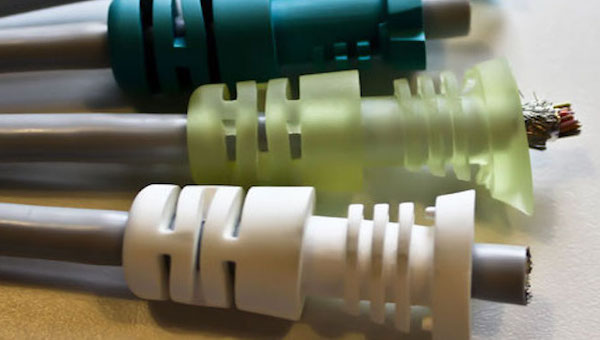
Overmolding, a unique marvel in production and rapid manufacturing, involves the fusion of two or more distinct materials to craft a singular, multifaceted component. This intricate process typically unfolds by molding a robust plastic part, followed by the application of a supple material, resulting in a seamless final product.
Lorem ipsum dolor sit amet, consectetur adipiscing elit. Ut elit tellus, luctus nec ullamcorper mattis, pulvinar dapibus leo.
Development
Delving into the annals of manufacturing history, the concept of overmolding has traversed several decades, undergoing a metamorphosis spurred by advancements in both materials and technology. In its nascent stages, overmolding found its footing in the fabrication of rigid rubber articles and the soles of footwear. However, the transformative arrival of thermoplastic elastomers in the 1960s bestowed newfound versatility and cost-effectiveness upon the process.
Applications
In the contemporary landscape, overmolding has transcended its origins, finding applications across diverse industries such as automotive, medical, electronics, and consumer goods. It has become the linchpin for crafting products endowed with intricate geometries and elevated performance attributes. The evolution of over-molding points towards a promising future as relentless research and development continues to push the boundaries of materials and plastic molding technologies. As we navigate the intricate world of overmolding, we uncover not just a manufacturing technique but a narrative of innovation, adaptability, and boundless possibilities.
Overviews of Overmolding Process: How Does it Work
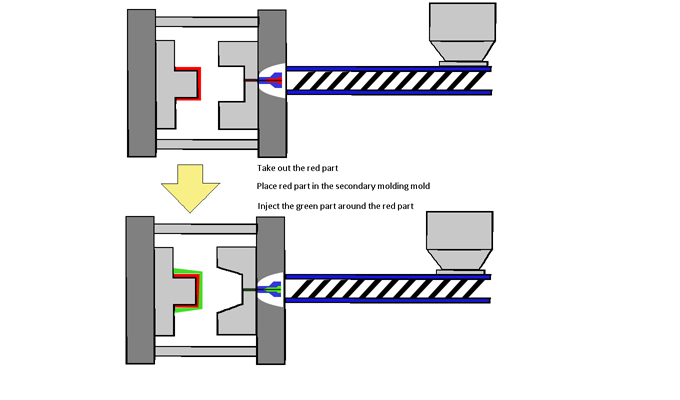
Overmolding is a groundbreaking technique in manufacturing, choreographs the seamless integration of diverse materials into a singular masterpiece.
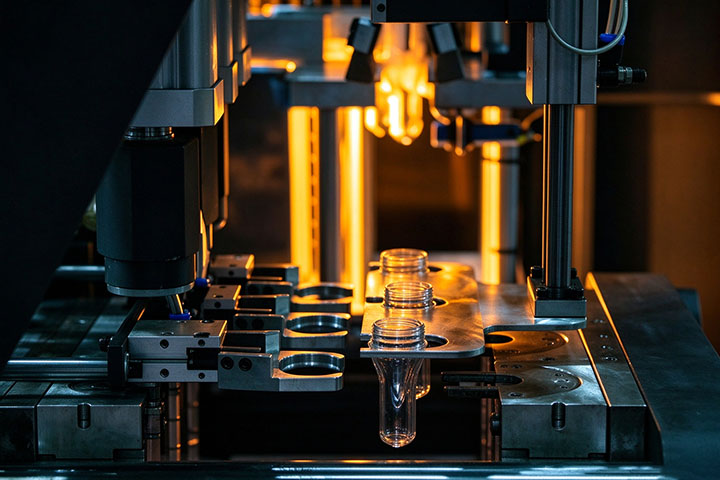
The process begins with precision injection molding, shaping a robust plastic entity. It sets the stage for the subsequent dance, where a complementary, pliant material gracefully over-molds onto the initial structure.
Heat and pressure act as virtuoso conductors. Elevated temperatures render the primary plastic entity pliable, setting the stage for the over-molding duet. This orchestrated performance continues as pressure takes center stage, ensuring a seamless integration of materials.
The result is not just coexistence but a fusion, bestowing the final piece with heightened resilience, ergonomic finesse, and visual allure surpassing the mere sum of its parts.
Types of Overmolding
Plastic over Plastic
Material selection is important, the melt point of overmolding material should be not higher than the base part. Good mold fitting is necessary.
♦ Steel mold injection molding is better.
♦ Achieves detailed geometries.
♦ Prototypes and production are available.
Rubber over Plastic
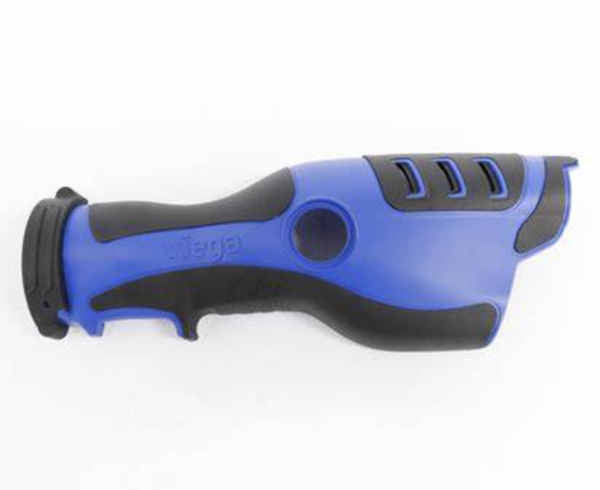
Overmolding improves product functionality and aesthetics by fusing different materials into one part, adding features like soft grips and multi-color designs for enhanced usability
♦ Improves strength and lifespan.
♦ Combine 2 or 3 more materials seamlessly.
♦ Different colors and texture available.
Plastic over Metal
Integrating metal into plastic parts during molding, enhancing strength and reducing assembly time for components with embedded features. Just some kind of insert molding.
♦ Reduce step of assembly.
♦ Enhance components durability.
♦ Reduce labor costs.
Rubber over Metal
The adhesion is critical for rubber over metal molding. Besides from material selection, product structure such as undercuts are necessay to avoid peeling off.
♦ Improve the product’s performances.
♦ Enhance the product’s function.
♦ Common overmolding type.
Overmolding Materials Selection
The most important of overmolding is the materials can be chemically bond together firmly.
General material matches for over molding:
PP+TPE
ABS + TPE
ABS+TPU
PC/ABS+TPE
PC/ABS + TPU
PC + ABS
Front material to be injection molded first.
Not suggest for Over-molding:
PA66 + TPE
PA66 + TPU
PA66/GF + TPE
PA66/GF + TPU
The suggestions above is only for the general grade, but not includes the specific grade one.
Same material but secondary overmolding color
The following materials are frequently used for overmolding with multi-colors: ABS, PC/ABS, PC, HDPE
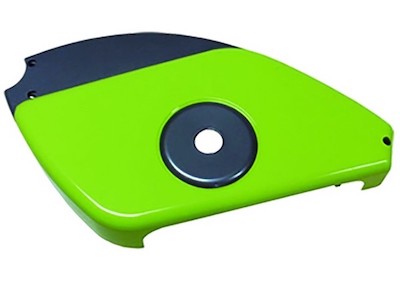
A very important detail for same plastic overmolding is that the setting of injection molding temperature. Our consideration is for avoiding/reducing the melting issue at the first component, as their melting temperature are the same. injection molded first.
TEAM Machining Overmolding Solutions
Rapid Tooling
Realized your design to test the market shortly through excellent quality rapid tooling method:
1. Shared mold base and flexible tooling components to shorten tool making time.
2. Tooling lead time ranges from 1-2 weeks, depending on the part’s geometry.
3. Rapid tool’s life ranges from 500 – 5,000+ shots.
4. Family mold & Tool modifications available.
5. 2 years’ free store time and tool maintenance.
Production Tooling
TEAM Machining applies high-strength, durable tool steel material to creates high-quality production molds for high-volume plastic parts production.
1. Multiple cavities & hydraulic sliders
2. Heated cores & Hot runner available.
3. Simple and complex tooling structure available.
4. Tooling lead-time ranges from 4+ weeks, depending on the part’s geometry.
5. Lifetime Rapid Production Tooling guarantee.
Injection Molding Capabilities
| Standards | Description |
|---|---|
| Maximum Part Size | 1200×1000×500 mm |
| Minimum Part Size | 5×5×5 mm |
| Part to Part Repeatability | +/- 0.1 mm |
| Mold Cavities | Single-cavity molds, multi-cavity molds, family molds |
| Available Mold Types | Steel and aluminum molds. Production levels below 1000, 5000, 30000, and over 100000 uses |
| Mold Cavity Tolerances | +/- 0.05 mm |
| Secondary Operations | Mold texturing, pad printing, laser engraving, threaded inserts, and basic assembly |
| Undercuts | Y-type, L-type undercuts |
| Wall Thickness | 0.5 mm to 5 mm |
| Draft | 0.5° to 2° |
| RIbs/Gussets | 0.5 mm to 3 mm thick |
| Bosses | Diameter 3 mm to 10 mm |
| Lead Time | Most orders can be completed within 15 working days |
Overmolding Cases
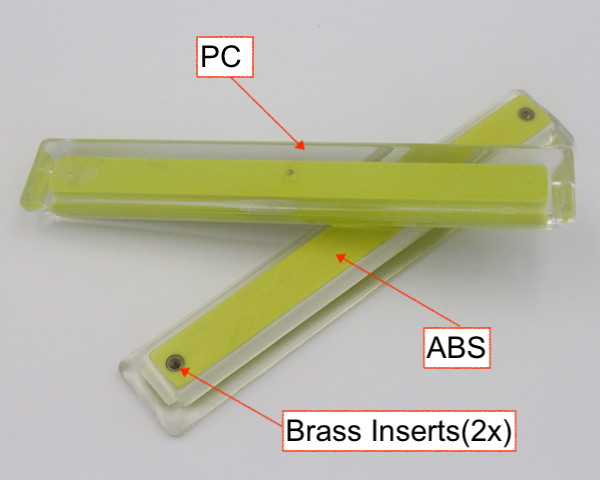
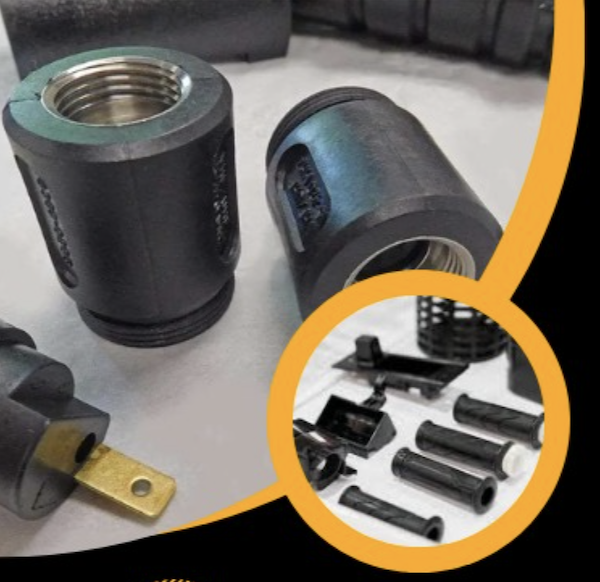
PC Over ABS & 2 Brass Inserts
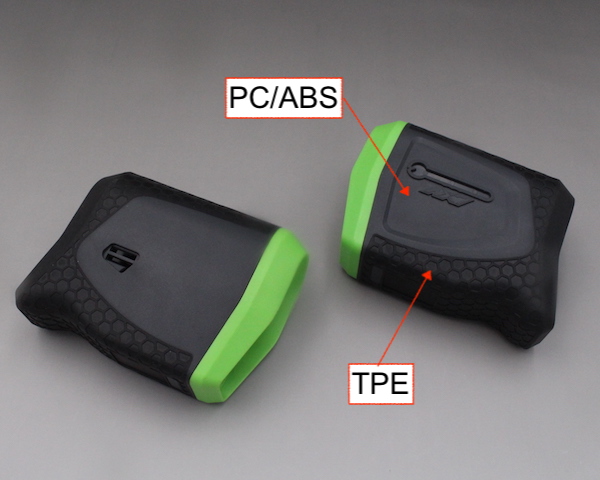
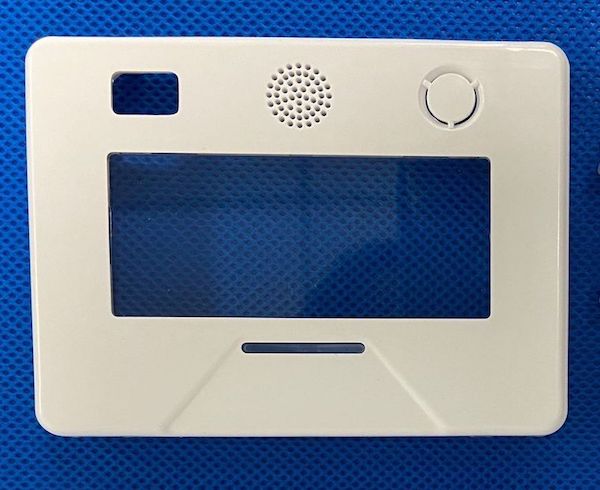
TPE over PC/ABS
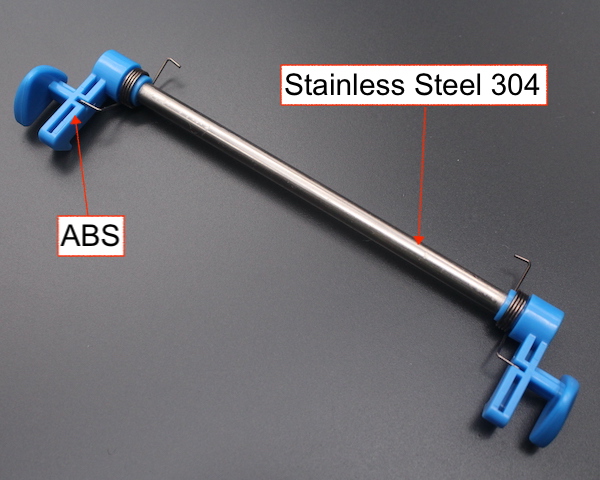
ABS Over SS304
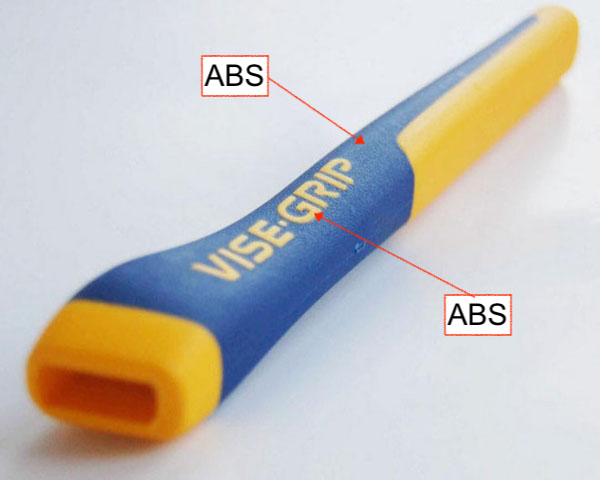
ABS over ABS
Happy Customer
” We are very impressed with the quality and efficiency. The product now is a commercially available success”
– Nicholas, Founder
TEAM Machining helps the customer to develop a case from prototyping to overmolding production.
This case is for a device that not just a typical baby monitor, it is a device that can keep track and record of your baby/toddlers sleep, comfort and distance.
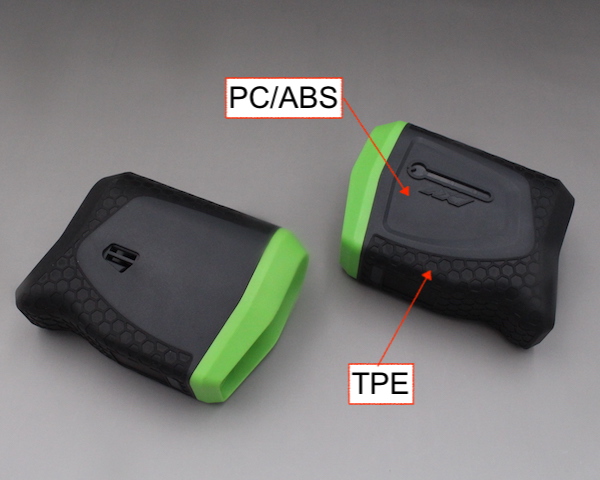
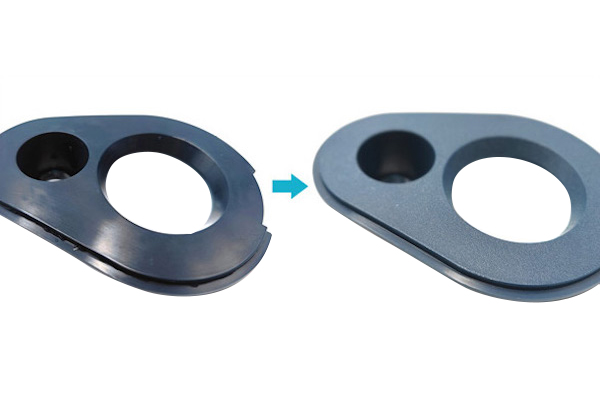
TPE over PC/ABS
Pros and Cons of Overmolding
Pros
This intricate process seamlessly integrates complex parts in a singular, efficient endeavor, significantly curtailing assembly time and associated costs. Its transformative touch extends beyond functional enhancements to encompass the realm of aesthetics, introducing elements such as soft-touch grips, seals, and captivating color contrasts. The protective embrace of overmolding acts as a shield, fortifying products against the challenges posed by impact, vibration, and environmental factors, elevating their overall durability and resilience.
Through the overmolding process, designers add a soft-touch exterior onto their parts to enhance the grip feeling or mold the part in 2 or more different materials to implement the functions. The part in overmolding looks more attractive to consumers. There is plastic overmolding, rubber overmolding, silicone overmolding etc. Here’s a more in-depth look at its advantages:
1. Implement the functions.
2. Enhance the products performances.
3. Increased shelf appeal.
4. Production available in cost effective way.
Cons
Within the expansive landscape of over-molding, challenges and considerations emerge. The necessity for specialized machinery and molds, while pivotal, demands a notable upfront investment, contributing substantially to the initial setup costs. Material compatibility stands as a critical linchpin, tethering the process to a subset of materials capable of harmonious bonding. The design complexities inherent in overmolding necessitate meticulous attention to both part geometry and intricacies in mold design. In the economic calculus of production, the brilliance of over-molding may encounter a diminished luster in scenarios of low-volume production, where the setup costs cast a substantial shadow over its cost-effectiveness. In navigating these dualities, the mastery of overmolding requires not only technical acumen but a strategic orchestration of resources and considerations.
Design Suggestions for Overmolding
1. Overmolding Surfaces in Rough Texture
When comparing to the smooth, glossy surfaces, rough textured surface can provide better bonding. 0.5 degrees draft for the bonding area is good for external surfaces.
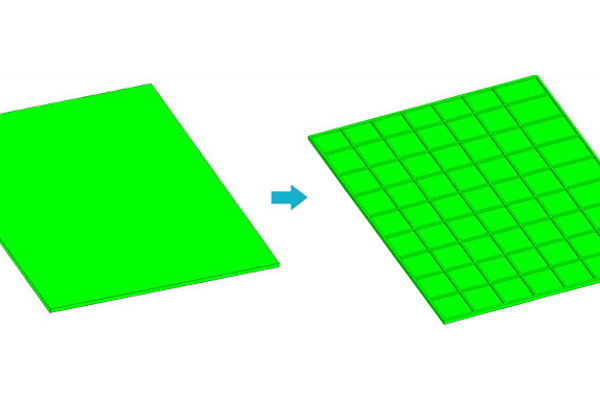
5. More Contacted Surfaces
Increasing both ribs and gaps are good for bonding. For increased how much and where can be increased, it depends on the product’s mechanical requirement.
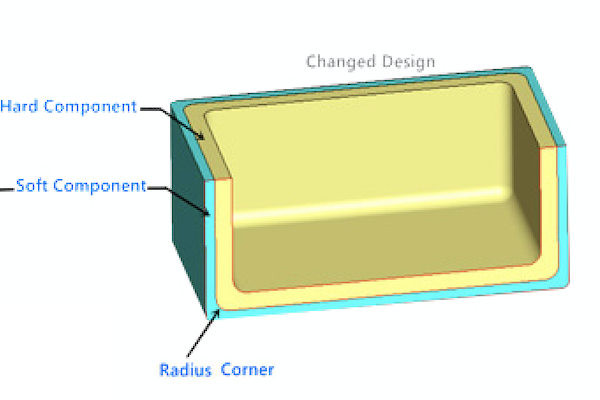
3. No Sharp Corner If Possible
As there are limited contact on sharp corner, the overmolding material is easy to peel-off. We suggest to have at least 0.5mm radius on the corner for bonding.
4. Set Undercuts for Better Holding
Even though chemical bonding is critical, an undercut mechanical design can help the product being much more reliable. With an external force, with the help of undercut, the mechanical bonding will suffer much less external force, so that the over-molding would be more reliable.
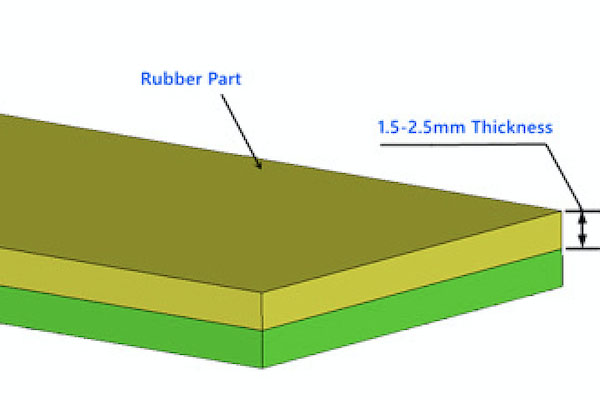
5. Have a Even Wall at 1.5-2.5mm
Too thin will cause short shot or not sufficient soft-touch feeling, too thick will cause uneven shrinkage, flashes or unstable molding production. 1.5-2.5mm is good for over-molding.
Overmolding: Elevating Industries through Versatility
The multifaceted prowess of overmolding permeates a spectrum of industries, bestowing upon products an amalgamation of versatility and heightened functionality.
Automotive Industry
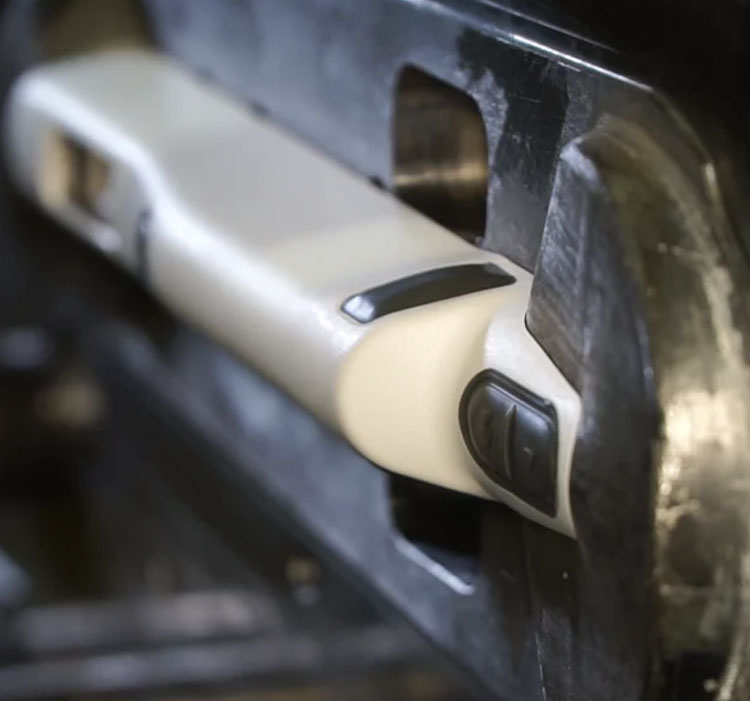
In the automotive sector, overmolding takes center stage, fashioning controls and handles with soft-touch grips, concurrently offering insulation for intricate wiring. Within the automotive realm, over-molding births components like seals, gaskets, and controls, where the soft-touch allure meets enhanced practicality.
Medical Industry
The medical landscape witnessed the ergonomic revolution brought about by over-molding, gracing surgical tools with comfortable handles, and encapsulating electronic components in medical devices. The medical tapestry showcases over-molded marvels, from surgical instruments donning ergonomic handles to medical devices encapsulating sophisticated electronics.
Consumer Industry
In the consumer electronics arena, over-molding crafts housings with tactile finesse ensures a comfortable grip while safeguarding delicate electronics from environmental influences. Smartphones, tablets, and wearable devices embrace over-molding, adorning their housings for an ergonomic grip and elevated comfort.
Instrument
The instrumental role of overmolding extends to power tools, wherein handles undergo over-molding for an augmented grip and heightened comfort, while sports enthusiasts encounter its impact in golf clubs and racquets featuring over-molded grips, elevating the arena of performance.
OverMolding vs. Insert Molding
Exploring the Techniques
In plastic molding, the dynamic interplay between overmolding and insert molding unfolds, each technique weaving its distinct advantages into the fabric of manufacturing innovation. Overmolding is an artful process where a material envelops a preformed part and extends its prowess to bestow a soft-touch exterior or forge seamless bonds sans adhesives or fasteners. In the parallel realm, insert molding steps onto the stage, wrapping plastic around a preformed entity—often a metal insert—giving birth to a unified component.
Overmolding vs. Insert Molding
The choice between overmolding and insert molding emerges as a nuanced deliberation. Should the pursuit be to infuse a gentle exterior into a robust plastic entity or seamlessly unite two parts without the crutch of adhesives, over-molding emerges as the artisan’s choice. Conversely, if the aim is to cocoon a metal insert within a plastic embrace, the spotlight gracefully shifts to insert molding. The verdict, whether favoring over-molding or insert molding, aligns with the bespoke demands of each unique project, where precision and innovation coalesce in the quest for manufacturing excellence.
faqs
Frequently Asked Questions
A: No. The materials must be chemically compatible or designed with mechanical interlocking features. Incompatible pairs will delaminate.
A: Tooling and cycle times are higher due to the multi-step process, but it often eliminates secondary assembly, resulting in overall cost savings.
A: It varies by manufacturer. Two-shot molding is cost-effective at high volumes, while insert overmolding can work for lower quantities.
A: Yes. Liquid silicone rubber (LSR) can be overmolded onto thermoplastic substrates, commonly used in medical and baby products.