Instant Quote

    Pressure Die Casting Services, Any Volume, Global Delivery

    Since 2017, TEAM Machining has been delivering pressure die casting (PDC) solutions to customers worldwide. Leveraging advanced die casting technology, we produce premium aluminum and zinc die cast parts that meet the most demanding industrial standards.Our custom die casting services are tailored for clients who require precision, dur ability, and cost-efficiency. From low-volume prototypes to high-volume production runs, TEAM Machining consistently delivers tight-tolerance parts with outstanding mechanical strength and superior surface finish.

    As a leading die casting manufacturer in China, TEAM Machining provides end-to-end support — from design optimization and mold making to casting, surface finishing, and quality inspection. Our experienced engineering team ensures that every part meets your exact specifications and performs reliably in real-world applications, such as:

    What is Pressure Die Casting

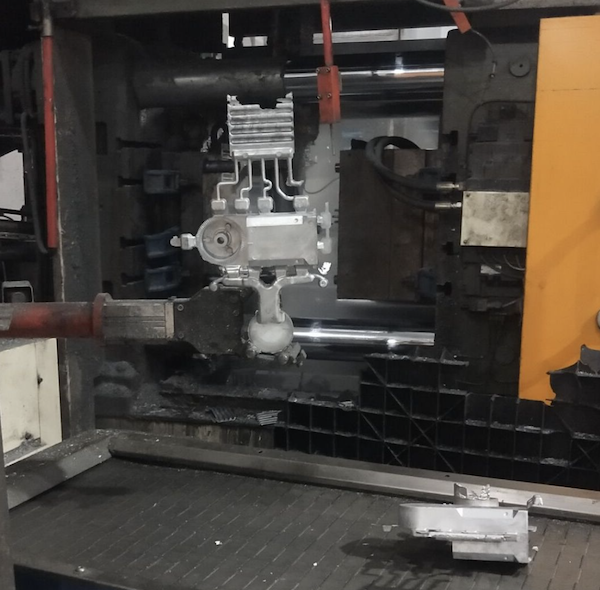
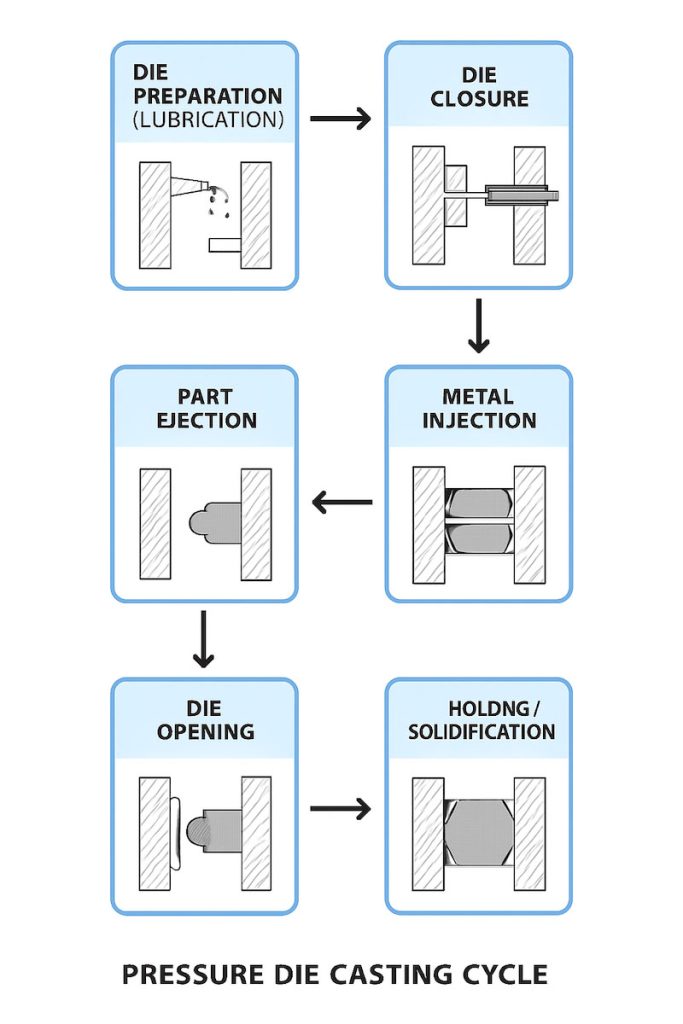
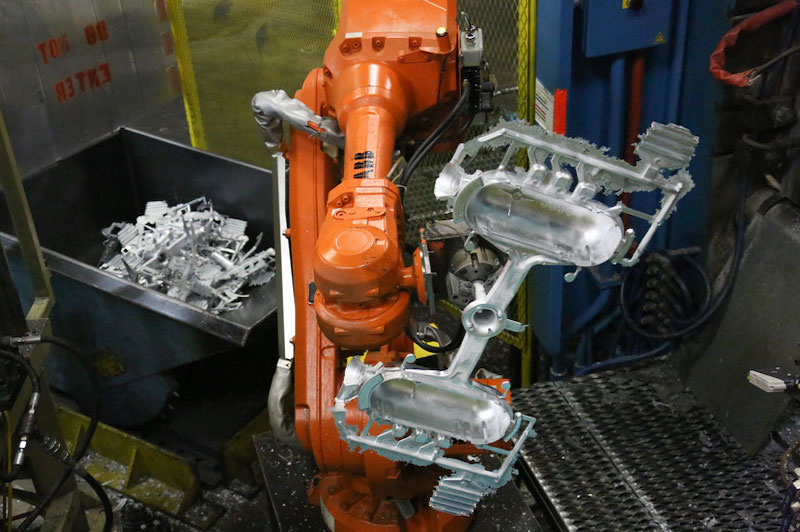
    Pressure die casting is one of the most efficient and widely used metal casting processes. It involves creating a precision metal mold (die), mounting it onto a die casting machine, injecting molten metal into the mold cavity under high pressure, and rapidly cooling it to form solid parts. Known for its high speed and exceptional precision, the process follows these key steps:


    → Die Preparation The die cavity and core surfaces are thoroughly cleaned and lubricated to ensure smooth metal flow and easy part release.


    → Die Closure The two halves of the die — the movable half and the stationary half — close and lock together under high clamping force, preventing molten metal from escaping during injection.


    → Metal Injection Molten metal (aluminum, zinc, magnesium, etc.) is injected into the die cavity at extremely high pressure — up to 2,000 bar (29,000 psi). Fill time is remarkably short, typically ranging from milliseconds to just a few seconds.


    → Holding & Solidification Pressure is maintained to ensure the metal completely fills the cavity and compensates for shrinkage as it solidifies. Cooling begins immediately upon injection. The cooling time varies depending on part size, wall thickness, and alloy type.


    → Die Opening Once the metal has fully solidified, the die opens. The casting is now rigid and ready for removal.


    → Part Ejection Ejector pins push the finished casting out of the die. Any excess material (flash) is trimmed off during post-processing.


    Cycle Time: Typically 30 seconds or less per cycle, and as fast as 10–15 seconds for small, thin-walled parts.


    Our Pressure Die Casting Services

    Aluminum Die Casting

    Aluminum die casting is the most common casting method, and you can find metal parts made of aluminum materials in various products. This metal is lightweight and durable, perfect for manufacturers to use as the primary metal material to produce metal parts and components. It is also corrosion-resistant, which makes this metal a preferable material for various industrial applications. The characteristics of aluminum die casting parts:


    √ Low density

    √ Cold-chamber process

    √ High dimensional stability in Aluminum Die Casting

    √ Excellent thermal and electrical conductivity

    √ Good corrosion resistance

    √ Good strength-to-weight ratio

    √ Can be highly polished

    √ Ideal for complex geometries

    Zinc Die Casting

    Another common metal material you can use for die cast is zinc. Zinc is used for various metal parts in the medical and molding die cast car industries, such as die cast cars, die cart trucks, galvanized chamber etc. For the best aesthetics, zinc is the preferred material for die-casting. Also, you can add the plating on the zinc surface to polish the resulting parts. Here are the characteristics of zinc die casting parts:


    √ High ductility and density

    √ Great impact resistance

    √ Easiest cast ability

    √ Excellent surface properties

    √ Low melting point and longer life span

    √ Hot-chamber process

    √ Avoid corrosion by coating

    √ Can make parts with very thin walls in Zinc Die Casting

    √ Suitable for plating

    TEAM MFG's Pressure Die Casting Capabilities

    Pressure Die Casting Solutions

    Small-Volume Production

    Address critical time-to-market needs by providing flexibility and economic efficiency for iterative development before full-scale production.

    High-Volume Production

    Support large-scale manufacturing demands, effectively overcoming common production challenges and offering on-demand production capabilities.

    One-Stop Post Machining & Surface Treatment

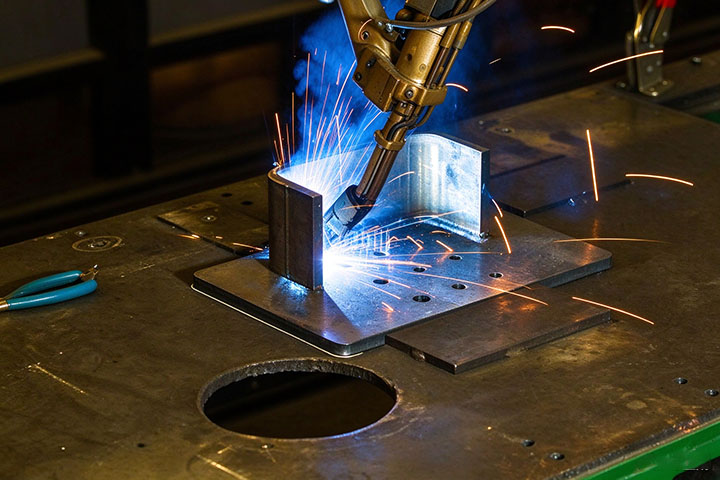
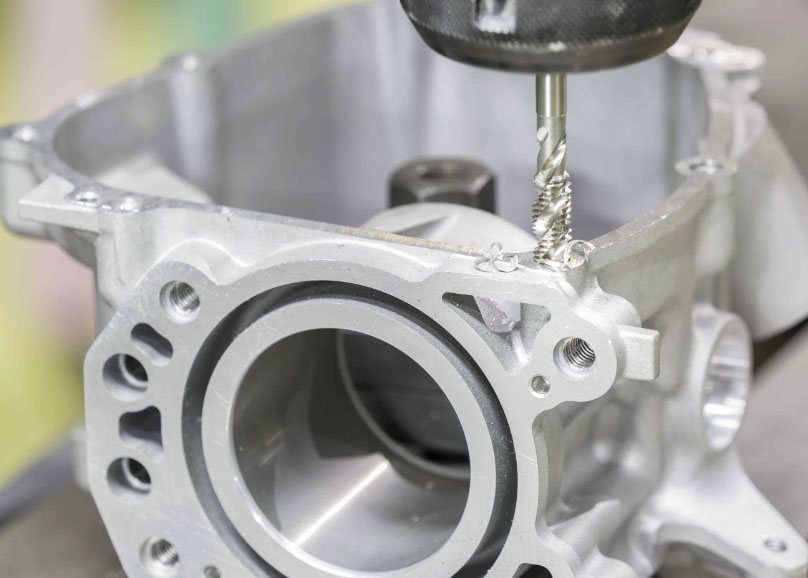
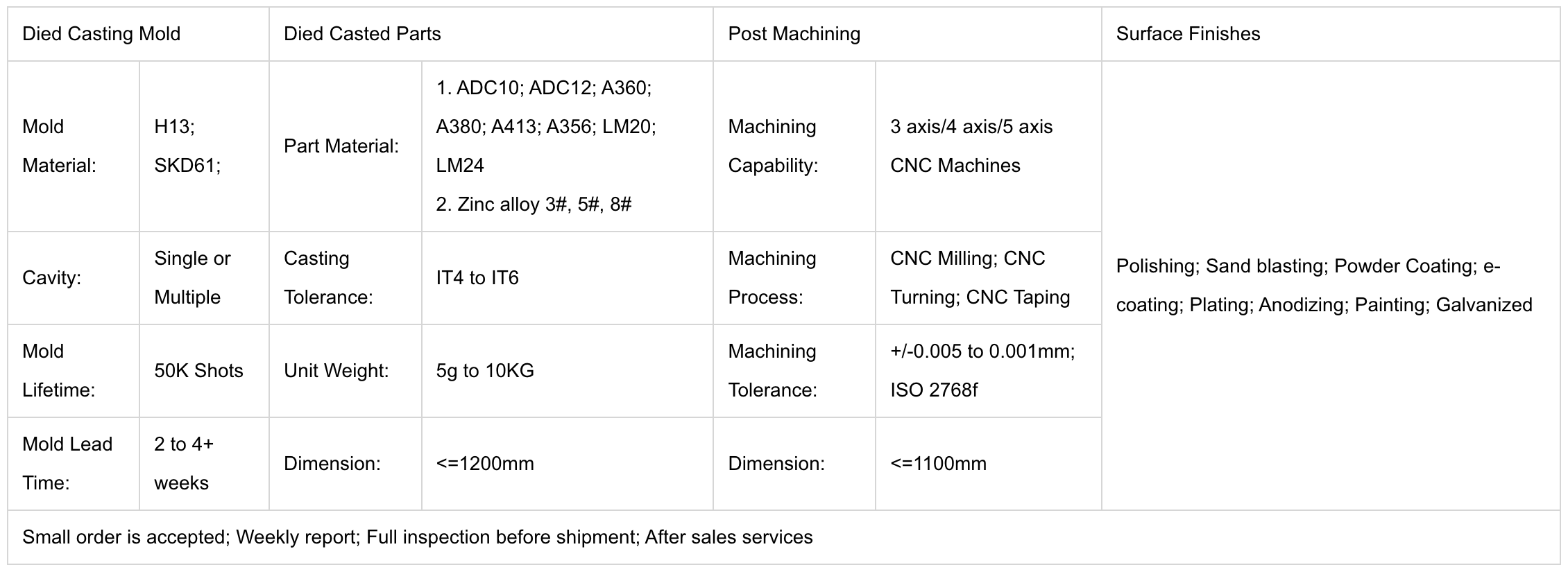
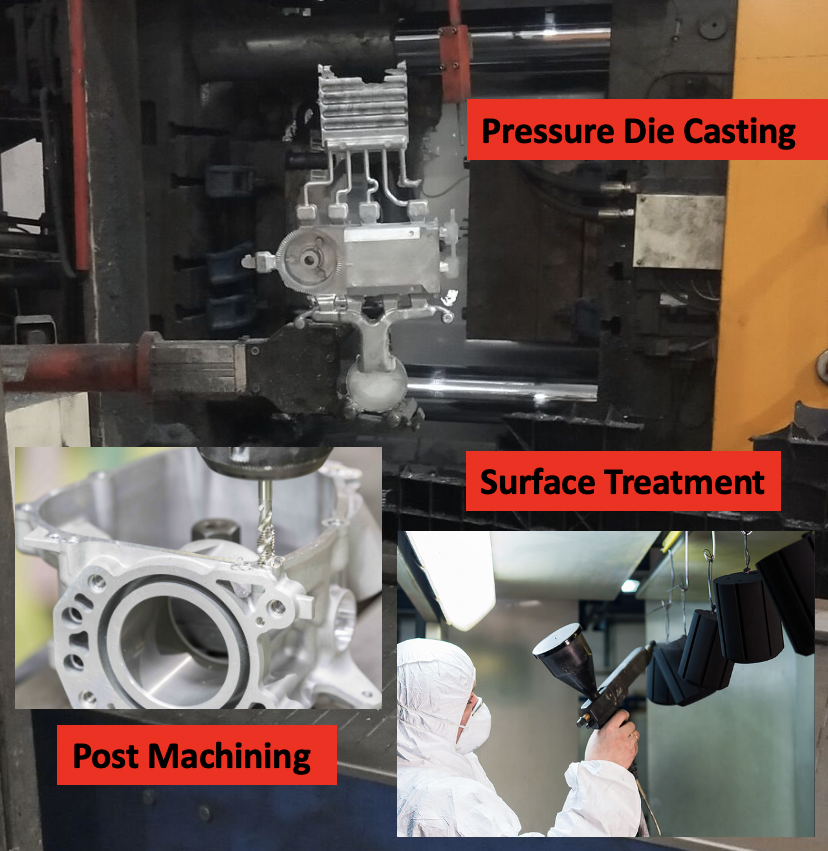
    Our capabilities include precision CNC machining, drilling, tapping, and threading, followed by a wide range of finishes—such as anodizing, powder coating, painting, plating, polishing, and sandblasting. This integrated approach ensures high accuracy, consistent quality, shorter lead times, and reduced handling costs for your parts.

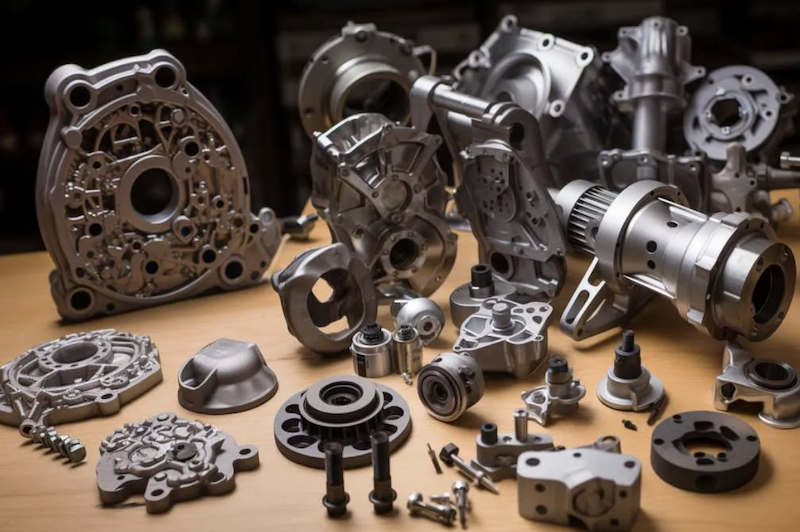
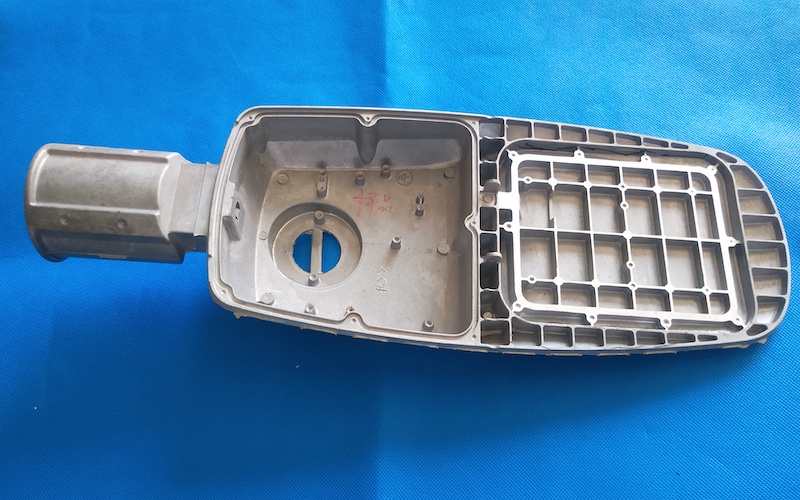
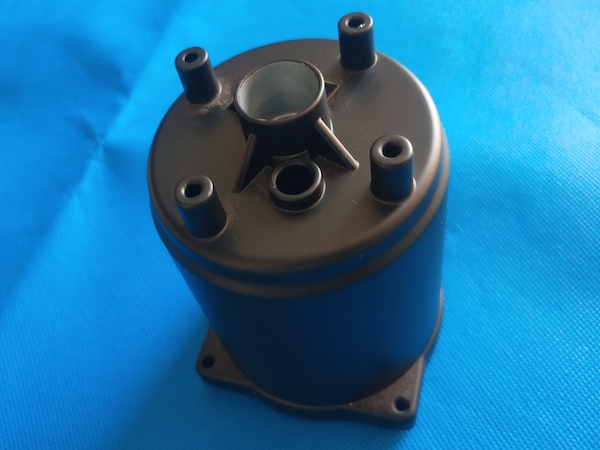
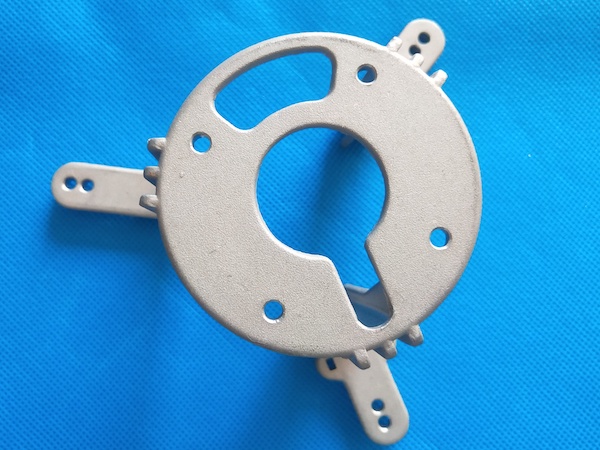
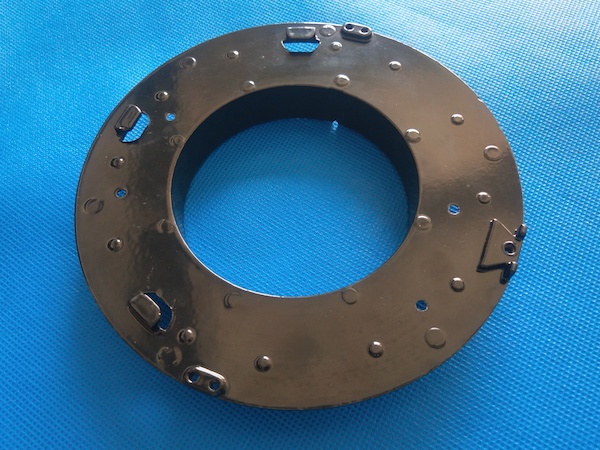
    Die Casting Parts We Made

    Benefits

    Pressure Die Casting Benefits

    In rapid manufacturing, die cast offers various benefits that other manufacturing methods can’t provide. By casting, you can create multiple die casting models with complex shapes and designs. Also, you can produce metal prototypes and hardware parts with a faster rate of production compared to the other manufacturing processes.


    ● Variety of materials

    There are various metal materials you can use for casting, which you can use for different purposes. For instance, you can use copper materials to create metal components with high electric conductivity.


    ● Complex designs

    You can molding die cast car using complex die-cast cars or truck designs. You can make various steel molds for die casting depending on your design requirements.


    ● Fast production

    The production speed is quite fast when you use the metals die cast method. Not only fast but die casting is also an affordable production process you can use to manufacture metal parts in large volumes and at the lowest expenses.


    ● Smoother surfaces

    The production result of the metal die cast will have smoother surfaces compared to the other manufacturing methods. It can make each metal part look more polished in molding die cast cars.

    Applications

    Applications of Pressure Die Casting

    Pressure die casting is widely used because it produces strong, precise, and complex metal parts in high volumes. Here are its main applications, grouped by industry:


    ● Automotive

    In the automotive industry, casting is a standard manufacturing method used to mold die cast cars and produce various die cast model cars and components. These parts include vehicle gears, transfer cases, vehicle engines, cylinders, and many others. Manufacturers can use different metal materials depending on their uses in the vehicle assembly process.


    ● Consumer products

    Many consumer products also use alloy die casting for their part or component production. For instance, faucets, heat sinks, and compressor pistons are everyday objects that use die casting in their production process.


    ● Construction

    In construction, you can use aluminum pressure die casting in various products, such as metal fixtures, fasteners, hand tools, and many others.


    ● Medical

    In the medical field, you can find die casting models or objects made with the die casting process, such as medical trays, tools, blood pressure monitors, and various medical equipment.

    Cold Chamber Die Casting Vs. Hot Chamber Die Casting


    Process Difference

    Materials

     Cycle Time

    Machine Complexity 

    Applications

    Quick Decision Guide

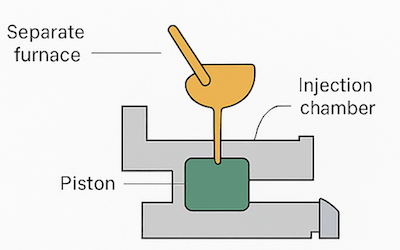
    Cold Chamber

    Metal is melted in a separate furnace and ladled into the injection chamber.

    A piston forces molten metal into the die from a cold chamber.

    Aluminum, magnesium alloys, copper-based alloys (high melting point).

    Slower cycle time (extra step of transferring molten metal).

    Machines can handle higher melting temperatures but face more thermal shock and mechanical wear from ladling.

    Automotive engine blocks, structural aluminum parts, aerospace components, pump housings.

    if you need high-strength aluminum or copper parts with higher melting temperatures.

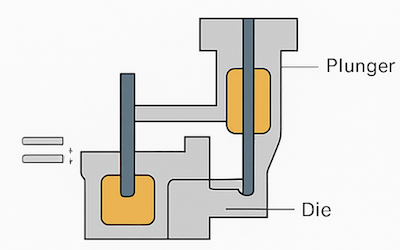
    Hot Chamber

    Metal is melted inside the casting machine’s built-in furnace. A plunger draws molten metal directly from the hot chamber into the die.

    Zinc, lead, and some magnesium alloys (low melting point).

    Faster cycle time (direct feed from furnace).

    Machines are simpler for low-melt alloys but suffer more corrosion due to molten metal contact.

    Small precision parts like zinc housings, toys, electronics connectors, decorative hardware.

    if you need high-volume, small zinc or magnesium parts with low melting points and fast turnaround.

    Quality Control on Every Manufacturing Step

    Comprehensive quality control from tooling to end products.

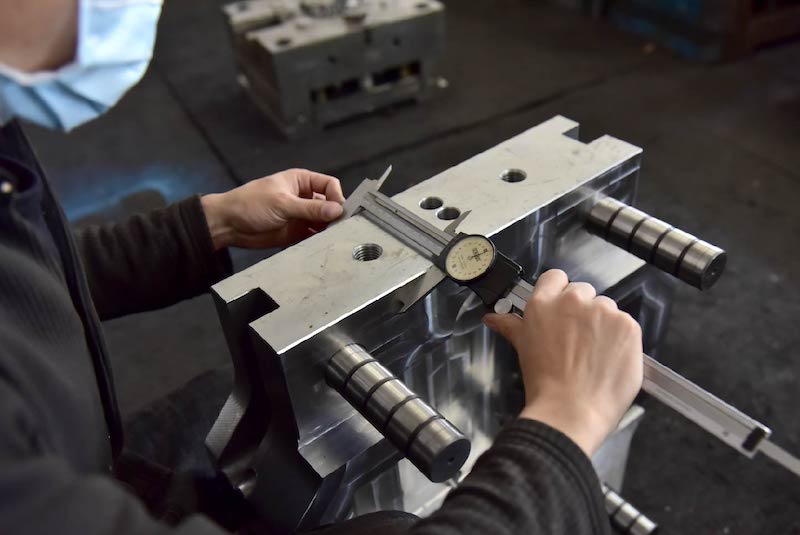
    Die Casting Mold Quality Control

    Material → Design → Machining → Heat treatment → Assembly → Trial casting → Casting inspection → Performance testing → Documentation.

    Die Casting Parts Quality Control

    Material → Process monitoring → Visual → Dimensional → Mechanical → NDT → Surface → Functional → Documentation

    Mold QC ensures tooling is correct → Part QC ensures castings meet requirements.
    Both are interconnected: a bad mold leads to defective parts, so both QC steps must work together.

    Custom Your Plastic and Metal Components Under One Roof

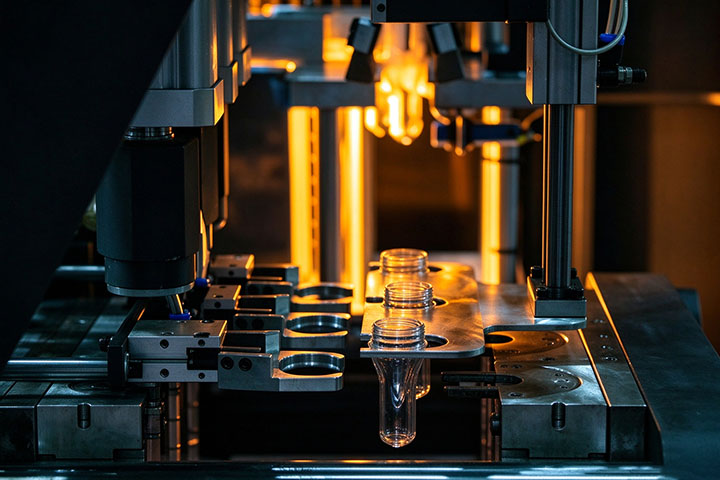
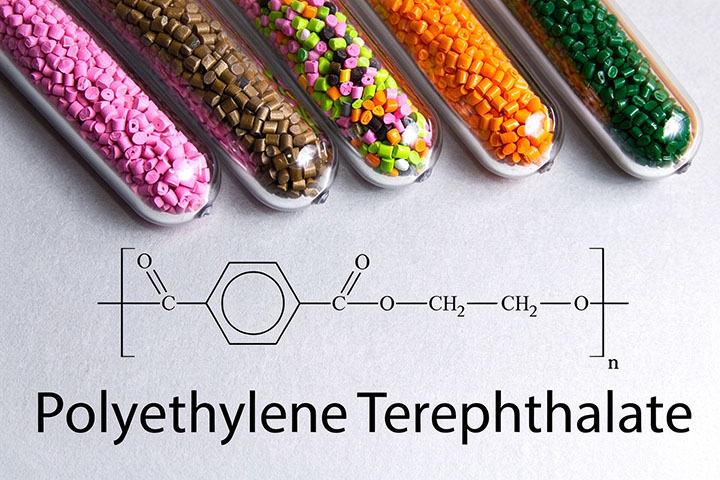
    As one of the leading die casting manufacturers, TEAM Machining offers more than just die cast parts. We also provide comprehensive plastic parts fabrication, giving you a true one-stop solution for all your component needs, which can save your time and cost to source and test different suppliers.


    Our seasoned engineering team takes the time to fully understand your design intent and consistently delivers multiple tailored proposals to help you produce parts faster and more cost-effectively.

    Castting

    faqs

    Frequently Asked Questions

    A: Yes — full customization is what we do best. TEAM Machining adapts every aspect of your part: design, geometry, size, wall thickness, and surface treatment. Our secondary services — CNC machining, polishing, anodizing, powder coating, plating, and more — deliver a finished component ready for assembly.

    A: Tooling → Low volume production → Mass Production — all under one roof.

    • Tooling: 3–6 weeks (in-house mold making, 24/7 machining shifts)
    • Low volume production: First samples within days of mold completion
    • Mass Production: Bulk parts shipped in 3–6 weeks after approval

    Total timeline from drawing to finished parts: typically 8–12 weeks, with exact dates confirmed in your quote.

    TEAM Machining can accommodate small or large orders, making PDC accessible for startups and large-scale industrial projects alike.

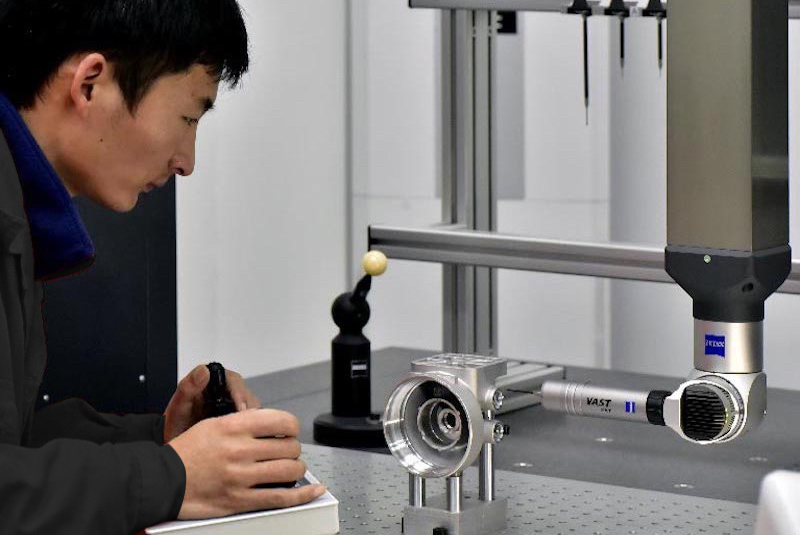
    A: From raw material to finished part, our quality control process never relaxes. Advanced CNC machinery, CMM inspection, and material testing equipment work together to ensure tight dimensions, flawless surfaces, and verified material properties on every order.

    A: Yes — engineering support is included with every project. Our seasoned engineers review your design, recommend optimal materials, and provide DFM feedback to maximize part performance while keeping manufacturing efficient and cost-effective.

    Learn About Manufacturing Processes, Technologies, and Machining Solutions

    Blog

    CNC Machining Suggestions from Prototypes to Scale-Production

    news

    Prototype to Production Manufacturing Roadmap

    gallery

    View our gallery and see what we have done! check now!

    Cases study

    TEAM Machining delvieried lots of projects to our customers...